
Resources
Literature: (coming soon)
foliarPRO™ Videos
- Manufacturing plant
- How is it DIFFERENT?
- How does it WORK?
- How will it increase PROFIT?
Colombian Visit – Jan, 2017
All you ever wanted to know about foliarPRO™
... yes, it's different – but is it better?
Foliar Fertilizer has many benefits but it does not necessarily provide all of the solutions to every crop issue. We'll take a close look at the many factors surrounding the concept of nutrient management through a plant's foliage versus through it's root system.
1. What is foliar feeding?
Like the term implies, foliar feeding is a program of applying nutrients to the plant directly through its plant tissues rather than through it's root system. This applies to not only leaves, but to all tissue, including stems, trunk, fruit and nuts, although certain tissue is better at absorbing nutrients, particularly softer tissue like leaves.
2. Does foliar feeding work?
Dr. H.B. Tukey, renowned plant researcher and head of the Michigan State University Dept. of Horticulture in the 1950's, working with research colleague S.H. Wittwer, first proved conclusively that foliar feeding of plant nutrients really works.
Researching possible peaceful uses of atomic energy in agriculture, they used radioactive phosphorous and potassium to spray plants, then measure with a Geiger counter the absorption, movement, and utilization of these and other nutrients within plants. They found that plant nutrients moved at a rate of about one foot per hour to all parts of the plants, from the tips to the roots. The entire plant received a serving of nutrients.
3. Can Foliar Feeding take the place of standard soil applied fertilizer, either granular or liquid?
Foliar Feeding is more often used as a supplement rather than a replacement for soil applied fertilizer. However, under certain circumstances when the soil nutrient profile is balanced correctly between all of the primary, secondary and micro-nutrients and the pH is correct, it may be possible to rely primarily on foliar application, if not entirely.
It also has to be understood that the roots are still functioning in the soil. Although foliar nutrient applications may be able to make a significant difference in crop success, they cannot totally overcome poor soil.
4. How much product is required?
Depending on the crop, the amount of foliage at a particular growth stage, the nutrient levels required and the growth stage that the crop is in, relatively small amounts of nutrients are required, as little as a couple of gallons per acre. Large plants like fruit trees or densely planted crops like mature corn can utilize 5 gallons or more per acre.
The plant can only absorb so much nutrition at one time, so it may be necessary to put on more applications of smaller amounts rather than too much at one time.
5. What is the Cost Difference?
Because less product is needed, foliar applications are typically less costly overall than soil applied nutrients.
6. Why is Less Foliar Product Needed?
When NPK granular products are placed in the soil, many different things take place, often reducing the effectiveness of the application.
- When a granular product is applied and there is not enough rain, the ingredients may not completely solubilize and become available to the crop.
- If there is too much rain, nitrogen can wash away, either liquid or granular, or move so deep into the soil that plant roots cannot reach it.
- Once urea nitrogen is in a liquid form, it can evaporate into the air.
- If the fertilizer is not close enough to the plant, the roots may not be able to reach it. Even 6” may be too far away for many crops.
- There are six places in the Nitrogen Cycle where bacteria convert nitrogen into more plant available forms. Without biology, less nitrogen is available.
- If the pH is not correct, micro-nutrients are not available to the plant.
- Even if all of the above factors are not an issue, it does take a much longer time for soil applied granular nutrients to become available to plants.
- Because the conversion is slower, it is very difficult to adjust nutrient levels quickly.
- Therefore, excess nitrogen is typically applied to the soil with the recognition that some will be lost because of the above factors. In severe cases, up to 90% can be lost.
- Conversely, foliar feeding overcomes all of the above issues except correcting soil pH. Foliar nutrition is absorbed immediately, so it does not evaporate or wash away.
- Rain or lack of rain has little effect as to nutrient availability.
- Foliar feeding can be up to 95% efficient, therefore much less product may be required.
7. Adjusting Nutrient Levels Quickly
There are many potential reasons to want to adjust nutrient levels quickly:
- Some nutrient formulations encourage root and plant growth, blossom set, growth of fruit, vegetables, and nuts.
- Other nutrient formulations help manage disease, and increase shelf life.
- Most importantly, balanced nutrient formulations are needed for healthy plant growth at all growth stages.
- Changes in nutrient levels can take place in a couple of days, and reversed a couple of days later.
8. Can Liquid Formulations Be Used Other Than as Foliar Applications?
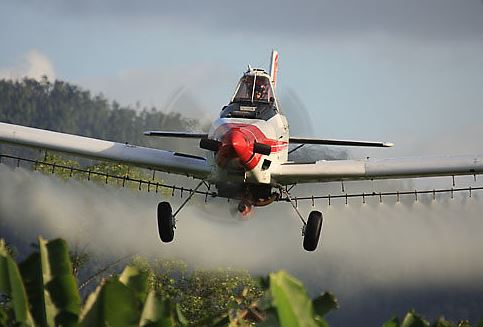
Yes, formulations can be used in drip systems, pivot systems, with aircraft, as well as soil-applied. They can also be used to pre-treat seed.
9. Are Some N-P-K Liquid Formulations Better Than Others?
Yes, some chemical formulations can be better absorbed by the plant not only because of the chemistry, but also because they are pH neutral and contain no chlorides or other salts.
Orthophosphoric Acid (also known as Phosphoric Acid) H₃PO₄ – This chemical form of phosphorus is preferred by the plant and can be immediately used. H₃PO₄ is Food Grade, being the phosphoric acid in popular cola beverages. Conversely, the chemical formulation of phosphorous typically used in fertilizer, P₂O₅, is corrosive to metal and can burn skin and lungs. P₂O₅ only becomes orthophosphate with sufficient quantities of water.
Potassium Hydroxide KOH – Is a strong base, when combined with Phosphoric Acid is chlorine free, pH neutral and Food Grade. It is perfect for plants.
Aqueous Ammonia NH₃ – Nitrate is the form of nitrogen directly assimilated by the plant.
When these three high quality ingredients are combined, almost all of the nutrient value can be used by the plant. This is not possible with liquid products formulated with any other ingredients.
10. What About Secondary And Micro-nutrients? Can these be added as needed?
Yes, EDTA chelated Micro-nutrients:
- are formulated for 100% plant uptake,
- can be combined with the N-P-K foliar formulations described above, and
- are required by all plants in appropriate balance to maximize crop production and nutritional value.
Available are: Boron, Copper, Iron, Manganese and Zinc. Secondary nutrients Sulfur and EDTA Calcium and Magnesium can also be formulated together with all of the other nutrients.
11. Can Any Other Items Be Applied to the Foliage?
A range of surfactants, organic acids, enzymes, carbohydrates, dispersing agents and other growth and crop enhancing compounds can be sprayed on foliage. Foliar applications offer many advantages:
- More quickly and easily applied – vs – soil applied
- More easily absorbed by the plant
- Utilized fully with little waste
- More cost effective
- Much faster response time
- Applications may be altered as required throughout the growing season to maximize production
- Less toxic to the environment
- Can be combined with many other crop enhancing additives and/or control products